
rafavi bluetooth game earphone X6
- Brand / Product logo:
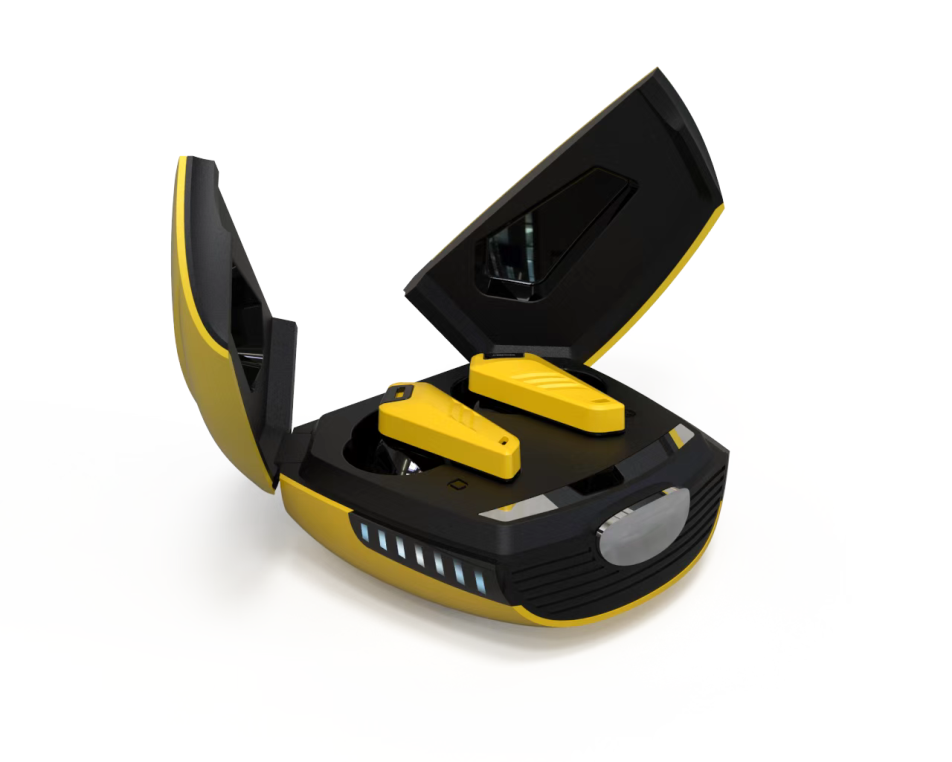
Mecha sports car tail wing door design
The high-end painting process has exquisite patterns
RGB Parkour ambiance lights are full of ritual feeling
Immerse yourself in your ears

Mecha sports car tail wing door design
The high-end painting process has exquisite patterns
RGB Parkour ambiance lights are full of ritual feeling
Immerse yourself in your ears
In the competitive landscape of gaming audio, low latency, high-quality sound, and seamless multi-device connectivity have become paramount. The advent of Bluetooth 5.4, particularly its LE Audio stack and the newly adopted Gaming Audio Profile (GMAP) v1.0.1, offers a robust framework for addressing these needs. This article delves into the technical implementation of a next-generation gaming headset that leverages the Nordic nRF54H20 SoC, combining the LC3 codec for LE Audio, dual-A2DP sink for classic Bluetooth, and the GMAP profile to achieve intelligent audio source switching.
Before diving into implementation, it is crucial to understand the protocol stack and how each component contributes to the overall user experience. The foundation is the Bluetooth 5.4 specification, which introduces enhancements for LE Audio. The key profiles and codecs involved are:
The Nordic nRF54H20 is a high-end multiprotocol SoC designed for demanding audio applications. It features a dual-core Arm Cortex-M33 processor, a dedicated DSP for audio processing, and a highly capable 2.4 GHz radio that supports both Bluetooth LE (including 5.4) and Classic Bluetooth. Its key advantages for this design include:
The core challenge in a gaming headset is managing multiple audio sources: game audio from a console/PC, voice chat from a phone or PC, and system notifications. The proposed architecture implements a priority-based audio mixer and a source switching engine. The system operates in several distinct modes:
The following pseudo-code illustrates the core switching logic on the nRF54H20:
// Pseudo-code for audio source switching on nRF54H20
// Assumes GMAP, BAP, and A2DP stacks are initialized

typedef enum {
    SOURCE_GAME_LE_AUDIO,
    SOURCE_VOICE_A2DP,
    SOURCE_PHONE_A2DP,
    SOURCE_NONE
} audio_source_t;

typedef struct {
    audio_source_t active_source;
    uint16_t game_latency_ms;
    uint8_t voice_gain;
} headset_audio_state_t;

headset_audio_state_t g_state = {0};

// Called when a new audio stream is announced via GMAP
void gmap_source_available(gmap_source_handle_t handle, audio_type_t type) {
    if (type == AUDIO_TYPE_GAME) {
        // Prioritize LE Audio game source over Classic
        if (g_state.active_source == SOURCE_VOICE_A2DP) {
            // Pause or reduce gain of voice, start game audio
            g_state.active_source = SOURCE_GAME_LE_AUDIO;
            g_state.game_latency_ms = 20; // Target 20ms latency
            bap_start_unicast_stream(handle, CODEC_LC3, SAMPLE_RATE_48KHZ);
            a2dp_sink_pause_stream(SOURCE_VOICE_A2DP);
        } else {
            // Simply start game audio
            bap_start_unicast_stream(handle, CODEC_LC3, SAMPLE_RATE_48KHZ);
        }
    }
}

// Called when voice chat data arrives over A2DP
void a2dp_voice_data_ready(uint8_t *data, uint16_t len) {
    if (g_state.active_source == SOURCE_GAME_LE_AUDIO) {
        // Mix voice at lower gain into game audio output
        // This requires a DSP mixer routine
        audio_mixer_mix(data, len, g_state.voice_gain);
    } else if (g_state.active_source == SOURCE_VOICE_A2DP) {
        // Voice is primary, pass directly to output
        audio_output_write(data, len);
    }
}

// Timer callback to monitor connection quality and switch if needed
void connection_monitor_timer_cb(void) {
    uint16_t current_latency = bap_get_stream_latency(SOURCE_GAME_LE_AUDIO);
    if (current_latency > 50) { // If latency exceeds 50ms, switch to Classic
        g_state.active_source = SOURCE_VOICE_A2DP;
        bap_stop_unicast_stream(SOURCE_GAME_LE_AUDIO);
        a2dp_sink_resume_stream(SOURCE_VOICE_A2DP);
        // Optionally, notify user via audio cue
    }
}
The LC3 codec provides multiple bitrates and frame durations. For gaming, the optimal configuration balances latency and quality. The GMAP specification likely mandates specific configurations. Based on the BAP v1.0.2 framework, we can define the following parameters:
For the dual-A2DP sink, the challenge is avoiding packet collisions on the 2.4 GHz band. The nRF54H20's radio scheduler must allocate time slots for both LE Audio and Classic Bluetooth connections. The following table summarizes the expected performance:
+----------------------+------------------+------------------+------------------+
| Connection Type      | Codec            | Typical Latency  | Audio Quality    |
+----------------------+------------------+------------------+------------------+
| GMAP (LE Audio)      | LC3 @ 128 kbps   | 20-30 ms         | Excellent (48kHz)|
| A2DP (Classic)       | SBC @ 328 kbps   | 100-150 ms       | Good             |
| A2DP (Classic)       | LDAC @ 990 kbps  | 150-200 ms       | Excellent        |
| Dual-A2DP (Mixed)    | SBC/SBC          | 150-200 ms       | Good (mixed)     |
+----------------------+------------------+------------------+------------------+
Several technical hurdles must be overcome to achieve seamless source switching:
The combination of Bluetooth 5.4 LE Audio, the LC3 codec, and the Gaming Audio Profile (GMAP v1.0.1) on the Nordic nRF54H20 SoC provides a powerful platform for next-generation gaming headphones. By implementing a dual-A2DP sink alongside GMAP, developers can ensure backward compatibility while delivering the low latency and high quality demanded by gamers. The source switching logic, as illustrated, allows the headset to intelligently prioritize game audio or voice chat based on context, creating a truly immersive and responsive audio experience. As the Bluetooth SIG continues to refine these profiles, we can expect even tighter integration and lower latencies, further blurring the line between wired and wireless gaming audio.
问: How does the Bluetooth 5.4 LE Audio with LC3 codec reduce latency compared to traditional Bluetooth audio in gaming headphones?
答: The LC3 codec, mandatory for LE Audio, achieves ultra-low latency by offering an algorithmic delay of typically 5–10 milliseconds, significantly lower than the SBC codec used in classic Bluetooth. Combined with the Gaming Audio Profile (GMAP) v1.0.1, which mandates specific configurations for latency and quality, and the Nordic nRF54H20's dedicated DSP for audio processing, the system ensures minimal delay between audio source and headset output, critical for real-time gaming responsiveness.
问: What is the role of the dual-A2DP sink in this gaming headset design, and how does it interact with LE Audio?
答: The dual-A2DP sink allows the headset to maintain two simultaneous classic Bluetooth A2DP connections to legacy devices, such as a phone for voice chat and a PC for game audio. This coexists with LE Audio via the Nordic nRF54H20's concurrent multiprotocol support, which time-slices the radio between LE Audio (e.g., GMAP-based game audio) and classic Bluetooth connections. The SoC manages these streams, enabling intelligent audio source switching based on priority or user input.
问: How does the Gaming Audio Profile (GMAP) v1.0.1 standardize the gaming experience across different devices?
答: GMAP v1.0.1 defines specific roles, such as Game Source (console or PC) and Headset (sink), and mandates interoperable configurations of lower-level audio services and profiles like BAP v1.0.2. It specifies latency and quality requirements, ensuring that any GMAP-compliant headset and source device provide a consistent, low-latency audio experience. This eliminates variability in performance across different manufacturers' hardware.
问: What are the key hardware advantages of the Nordic nRF54H20 SoC for implementing this audio source switching system?
答: The Nordic nRF54H20 features a dual-core Arm Cortex-M33 processor for handling complex protocol stacks, a dedicated DSP for real-time audio processing (e.g., LC3 encoding/decoding), and a 2.4 GHz radio that supports both Bluetooth LE 5.4 and Classic Bluetooth concurrently. This allows simultaneous operation of GMAP-based LE Audio and dual-A2DP sink connections, enabling seamless audio source switching without interference or increased latency.
💬 欢迎到论坛参与讨论: 点击这里分享您的见解或提问