
I. Existing Technology:
Traditional copper wire heating pads have inherent issues that are difficult to solve:
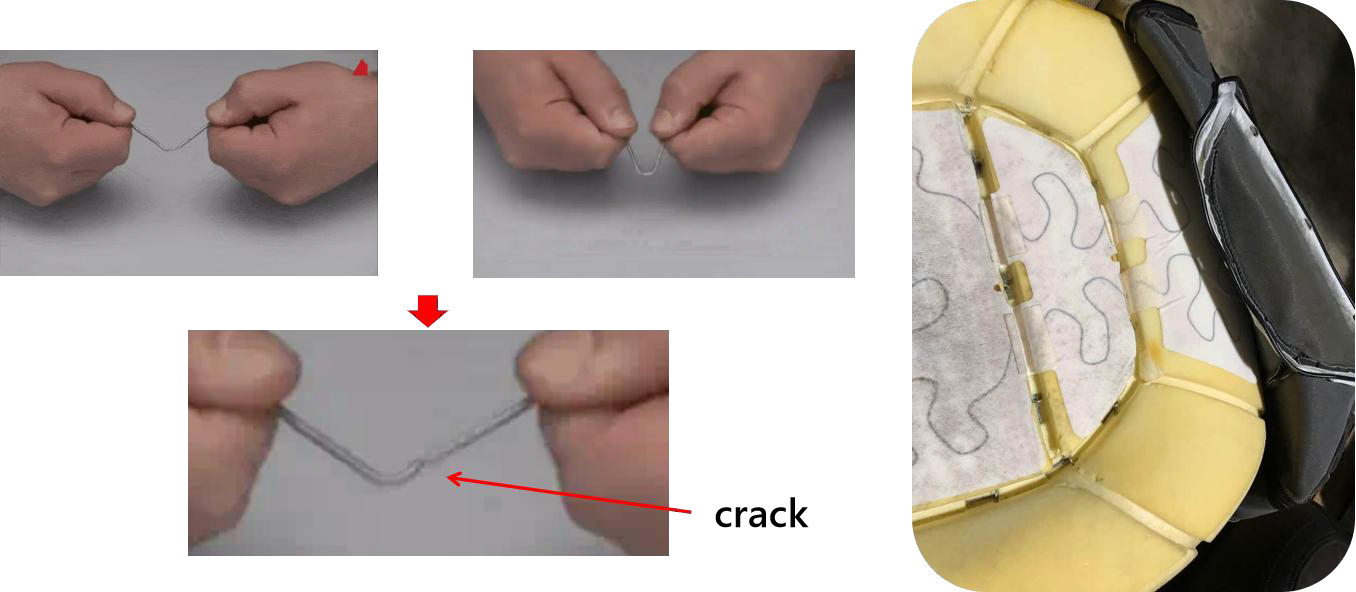
Due to metal fatigue characteristics, when the heating pad is subjected to prolonged stress, it is prone to metal fatigue, leading to increased resistance in the heating wire until eventual failure.
2 - Flexible Graphene Heating Pad
New Quality Technology - Verification:
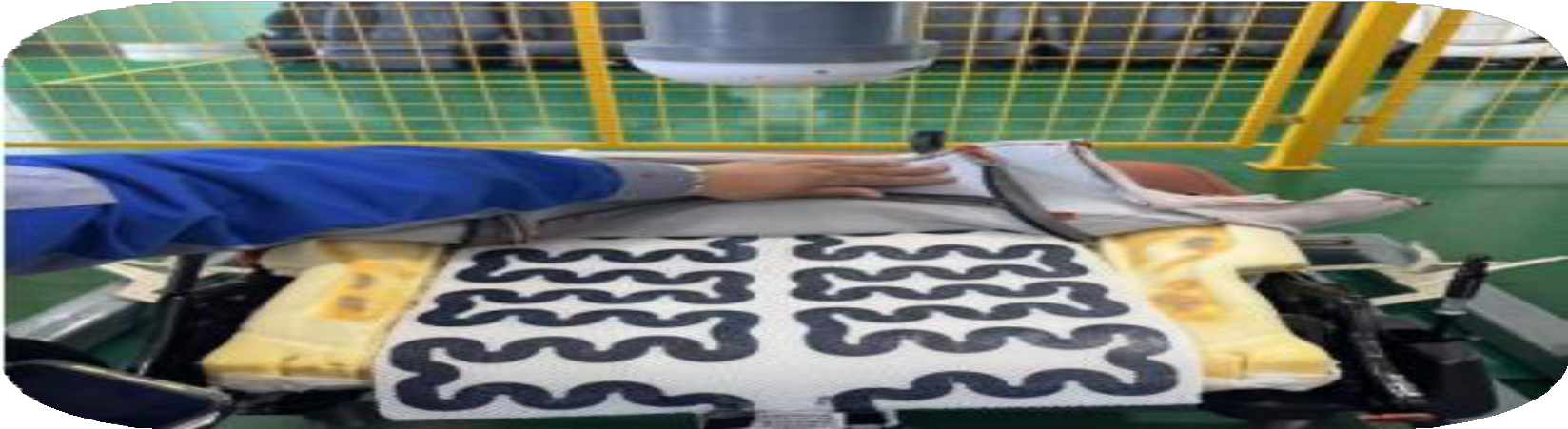
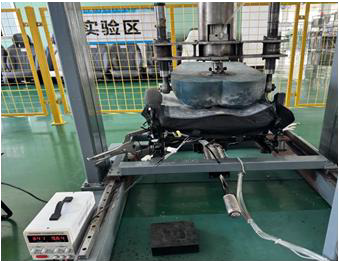
The world's first flexible graphene heating pad can overcome the aforementioned shortcomings.
It can withstand over 100,000 cycles of international standard knee load impact tests and over 50,000 cycles of international standard buttock twist fatigue cycle tests.
Under the same test conditions, randomly selected mass-produced copper wire heating pads failed after enduring only around 1000 test cycles.
Knee load 75kg / 100000cyc. + Entry test 75kg / 50000cyc.
Test standards refer to the following national and corporate standards:
QC/T 950-2025 "Technical Requirements and Test Methods for Automotive Seat Heaters"
Q-JKR J304023-2024 "Passenger Car Seat Heater System Technical Conditions"
QLiA3421212 "Seat Heater Performance Test Method"
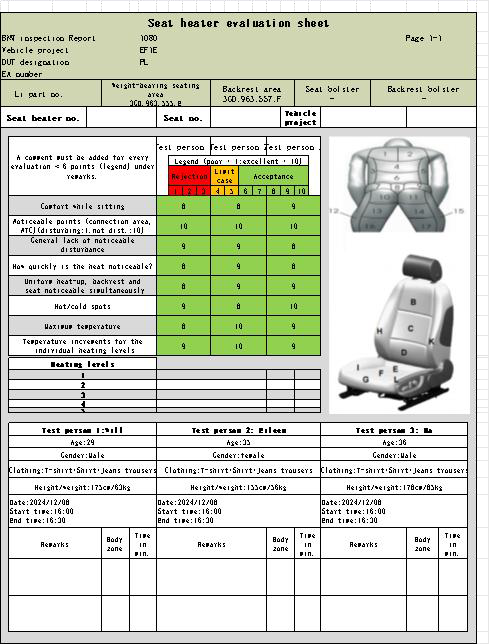
New Quality Technology - IP/Structure
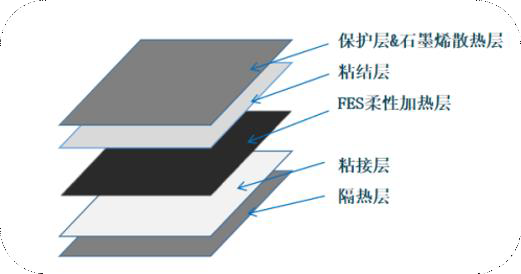
The world's first flexible graphene heating pad has its invention patent published. The product recently passed certification by the Shanghai Motor Vehicle Inspection Center & Technology Research Center.
The world's first flexible graphene heating pad utilizes graphene heat dissipation and an efficient thermal insulation structure, achieving high thermal efficiency. It saves 30-50% electrical energy compared to existing copper wire technology.
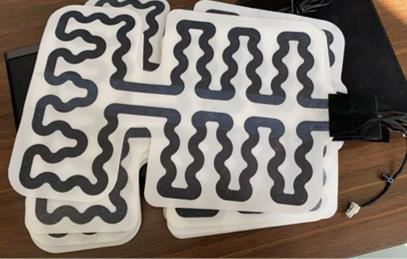
Performance comparison with existing copper wire and carbon fiber heating:
| Parameter | Copper Wire/Carbon Fiber Heater | Flexible Graphene Heater |
| Rated voltage | 13.5V | 13.5V |
| Current | 3-6A | 1.5-2A (High temp.) 1.0-1.5A (Medium temp.) 0.8-0.9A (Low temp.) |
| Average Power | 60 Watts | 20-30 Watts |
| Heating Rate | ≥0℃ 2min @ -20℃ ≥30℃ 5min @ -20℃ |
≥0℃ 0.5min @ -20℃ ≥30℃ 2min @ -20℃ |
| Water Proof | Average | Good |
| EL-Magnetic Radiation | NA | NA |
| Heating Temperatures | 37-42 ±1.5℃ | 37-42 ±1.5℃ |
| Temperature Control | NTC | w/o NTC |
New Quality Technology - Output Value/Market Prospects
| Application Area | Annual Output Value | Market Prospects |
| Automotive Seat Heater Steering Wheel Heater Armrest Heater |
Domestic: 3 billion RMB EU: 1 billion Euros North America: 4 billion USD Domestic: 400 million RMB EU: 400 million Euros North America: 600 million USD Domestic: 200 million RMB EU: 200 million Euros North America: 500 million USD |
1) World's first, disruptive to existing copper wire/carbon fiber heating. 2) Per graphene heating unit: Selling price > 20 RMB (Market recognizes graphene's value > existing copper wire) Cost 6 RMB, Profit > 14 RMB 3) Significant promotion potential in domestic, EU, and North American markets. Possibility to establish local factories in North America and the EU. 4) Geely is recently seeking graphene heating and low-cost SBR from Shanghai Jifeng Seat Factory to switch from current supplier Anxian's products, totaling 500,000 vehicles. With 4 heating pads per vehicle, the switch represents an output value of: 4 x 20 x 500,000 = over 40 million RMB. |
| Household Electric Blanket | Domestic: 200 million RMB EU: 200 million Euros North America: 500 million USD |
Replaces existing carbon fiber electric blankets, offering energy savings and safety. |
| Robotic Body Temperature Heating | Market gap | Vast market potential |
Application:
- Automotive heating systems
Used for seat heaters, steering wheel heaters, and armrest heaters. Compared to conventional copper wire heaters, it delivers higher durability (passes 100,000+ knee‑load cycles), faster heating, and 30–50% energy savings. - Civilian heating products
Can replace carbon fiber electric blankets, providing better energy efficiency and safety. - Emerging applications
Suitable for scenarios requiring flexible, durable heating, such as temperature control for robots and other advanced human‑machine interaction systems.
Contact: