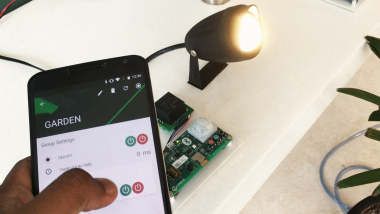
Bluetooth Innovation Contest: Designing Low-Energy Mesh Networks for Smart Buildings
The rapid urbanization of the 21st century has placed unprecedented demands on building infrastructure, driving a global shift toward intelligent, energy-efficient environments. At the heart of this transformation lies the need for robust, low-power, and scalable wireless communication. The Bluetooth Innovation Contest, a premier platform for engineers and developers, is currently challenging participants to design next-generation Low-Energy (LE) Mesh Networks specifically tailored for smart buildings. This article delves into the technical intricacies, application scenarios, and future trajectory of this contest category, exploring how Bluetooth LE Mesh is poised to redefine building automation.
Core Technology: The Architecture of Bluetooth LE Mesh
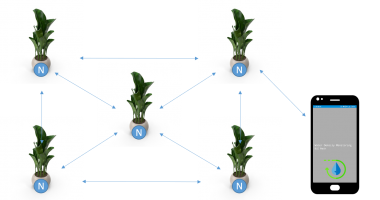
Traditional Bluetooth operates on a point-to-point or star topology, which is inherently limited for large-scale building deployments. The Bluetooth Mesh profile, introduced in Bluetooth 4.0 and significantly enhanced in subsequent versions, introduces a managed-flooding or friend-based network architecture. Unlike Wi-Fi, which relies on a central access point, a Bluetooth Mesh network is a true mesh. Every node—whether a light switch, a temperature sensor, or an actuator—can relay messages to its neighbors. This creates a self-healing, redundant network that can cover hundreds of meters without a single point of failure.
From a technical standpoint, the contest focuses on several key innovations. First, the use of the Bluetooth Low Energy (BLE) Physical Layer ensures that each node consumes only microamps of current in idle mode, enabling battery-powered sensors to operate for years. Second, the mesh stack employs a publish-subscribe model for message delivery. A sensor publishes data to a specific "address" (e.g., "temperature_group"), and any node subscribed to that address receives the message. This decouples the sender from the receiver, allowing for dynamic network reconfiguration. Third, the contest encourages the implementation of Friend Nodes, which buffer messages for low-power devices that enter deep sleep. This is critical for battery-operated door locks or occupancy sensors.
A significant challenge in the contest is managing network latency and packet collisions. In a dense mesh with hundreds of nodes, the managed-flooding approach can lead to redundant transmissions. Participants are exploring techniques like Time-Division Multiple Access (TDMA) within the mesh, or using the Proximity Profile to filter irrelevant messages. For instance, a temperature sensor in a conference room should not flood the entire building; instead, it should only relay to its local subnet. The contest judges look for solutions that balance coverage with efficiency, often citing the need to keep end-to-end latency below 10 milliseconds for real-time control applications like lighting.
Application Scenarios: From Lighting to Predictive Maintenance
The smart building market is projected to reach $150 billion by 2028, with lighting control representing the largest segment. Bluetooth LE Mesh is uniquely suited for this due to its low cost and ease of retrofitting. In a typical contest submission, a team might design a mesh network for a multi-story office building. Each light fixture contains a BLE node that can switch on/off or dim based on occupancy sensors. The mesh allows a single switch in a conference room to control all lights in that room without running new wires. A key innovation here is the use of Ambient Light Sensing to automatically adjust brightness, reducing energy consumption by up to 60% compared to static lighting.
Another high-impact scenario is HVAC Zone Control. Traditional thermostats operate in isolation. With a Bluetooth Mesh, temperature and humidity sensors in every zone can communicate with a central building management system (BMS). The contest encourages the design of adaptive algorithms that learn occupancy patterns. For example, if a meeting room is detected as empty for 30 minutes, the mesh can instruct the HVAC controller to reduce airflow. Industry data suggests that such zone-based control can cut HVAC energy costs by 25-35%. Participants are also integrating Asset Tracking using BLE beacons, which can locate equipment or personnel within a few meters. This is particularly valuable in hospitals or warehouses where real-time location services (RTLS) improve workflow.
Security is a critical component. The contest mandates the use of Bluetooth 5.0+ security features, including AES-128 encryption and device authentication. However, the mesh introduces new attack vectors, such as man-in-the-middle attacks on relay nodes. Advanced submissions implement Secure Network Keys that are rotated dynamically, and use Application Keys to isolate different functions (e.g., lighting data cannot be read by the HVAC subnet). One winning entry from a previous year demonstrated a mesh that could detect and quarantine a compromised node within 200 milliseconds, maintaining network integrity.
Future Trends: Edge Computing and AI Integration
Looking ahead, the Bluetooth Innovation Contest is pushing boundaries toward edge computing. Instead of sending all sensor data to a cloud server, which introduces latency and bandwidth bottlenecks, future mesh networks will process data locally on gateway nodes or even on the sensor themselves. This is known as Fog Computing. For instance, a smart building with thousands of sensors could aggregate temperature readings at a local gateway, calculate the average, and only transmit anomalies to the cloud. This reduces cloud costs and improves response time.
Artificial Intelligence (AI) is another frontier. Contest participants are experimenting with Machine Learning (ML) models that run on BLE-enabled microcontrollers (e.g., ARM Cortex-M4). These models can predict equipment failures before they occur. For example, a vibration sensor on an HVAC fan can detect subtle changes in frequency patterns, indicating bearing wear. The mesh network can then alert maintenance personnel, enabling predictive maintenance rather than reactive repairs. Industry reports indicate that predictive maintenance can reduce downtime by 30-40% and extend equipment lifespan by 20%.
The integration of Matter Protocol is also gaining traction. Matter, an open standard for smart home interoperability, now supports Bluetooth LE for commissioning. A mesh network designed in the contest could act as a backbone for Matter devices, allowing a single smartphone app to control lights, locks, and thermostats from different manufacturers. This convergence is expected to accelerate smart building adoption, as it eliminates vendor lock-in. Additionally, the move toward Bluetooth 5.3 and LE Audio will enable high-quality audio streaming over the same mesh infrastructure, opening possibilities for public address systems and emergency alerts.
Conclusion
The Bluetooth Innovation Contest serves as a crucible for the next wave of smart building technology. By challenging engineers to design low-energy mesh networks that are secure, scalable, and energy-efficient, the contest is accelerating the transition from isolated devices to truly intelligent ecosystems. From adaptive lighting to predictive HVAC, the applications are vast and the technical hurdles are formidable. As edge computing and AI become embedded in these networks, the smart buildings of tomorrow will not only respond to commands but anticipate needs, optimizing comfort and energy usage in real time. For participants, the contest is not just a competition—it is an opportunity to shape the future of urban infrastructure.
The Bluetooth Innovation Contest drives the evolution of low-energy mesh networks, enabling smart buildings to achieve unprecedented energy efficiency, scalability, and intelligence through edge computing and AI integration.