
Vehicles Export
Vehicles,Cars,Pickup truck,truck,Off-road vehicle,SUV Export

可选:点击以支持我们的网站
Distributor Contact Email:
China NEV (New Energy Vehicle).BYD,Chery,Skyworth,Lixiang,Hycan,
Aion,Deepal,etc.
Vehicles,Cars,Pickup truck,truck,Off-road vehicle,SUV Export
Jetta is the thirteenth brand of Volkswagen Group.
Kaiwo Huainan Plant mainly produces Skyworth Hongtu (pure electric/extended-range versions), K15D logistics version and autonomous driving series models, with the following core configurations:
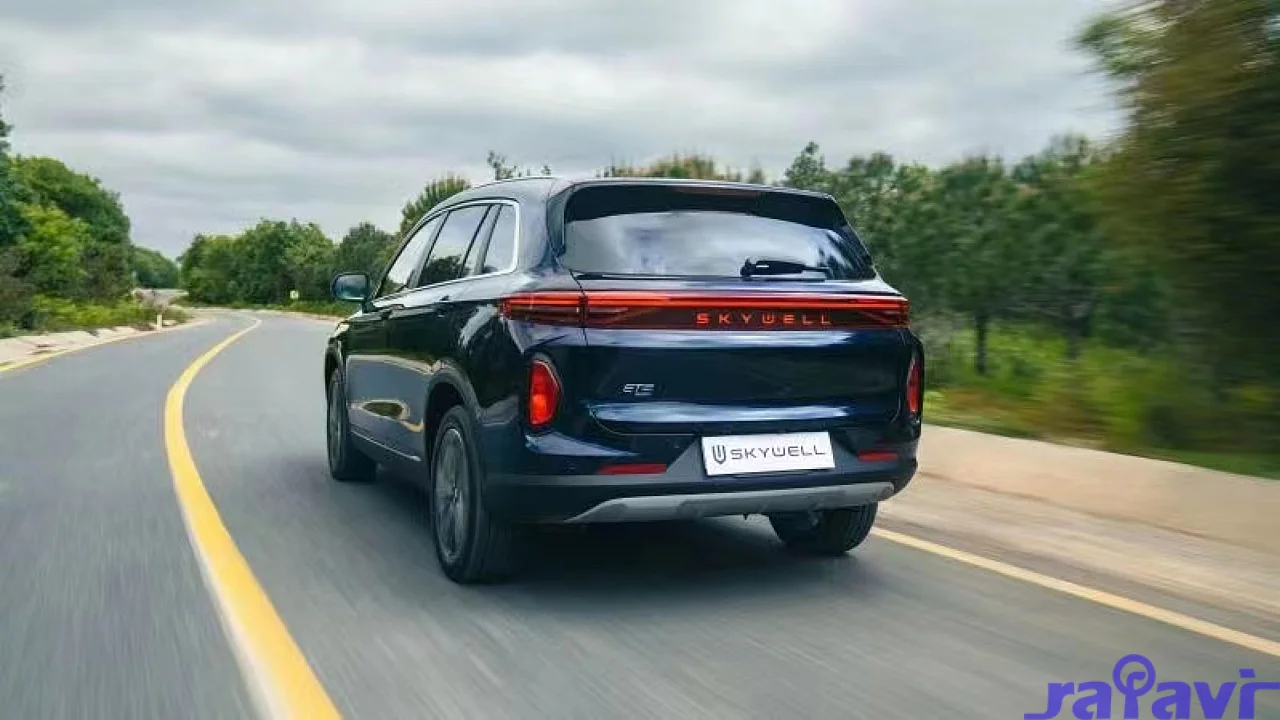
Skywell's first strategic SUV
In the competitive automotive sales market, providing potential buyers with transparent, real-time vehicle health data is a powerful differentiator. Traditional OBD-II scanners offer diagnostic trouble codes (DTCs) and basic sensor readings, but they rely on wired connections or legacy Bluetooth serial profiles (SPP). For modern car sales applications, a more sophisticated approach is needed: a Bluetooth Low Energy (BLE) GATT custom service that transmits high-frequency telemetry data directly to a Python-based dashboard. This article presents a technical deep-dive into implementing such a system, covering the BLE GATT service design, Python backend architecture, real-time data processing, and performance analysis. We will focus on a "CarSale" context where the goal is to showcase vehicle performance and health to prospective buyers without the need for an internet connection or complex hardware.
The system comprises three main components: a BLE-enabled OBD-II dongle (acting as a GATT server), a Python-based dashboard application (the GATT client), and the Python telemetry processing engine. The OBD-II dongle reads data from the vehicle's CAN bus via the standard OBD-II protocol (ISO 15765-4 for CAN). Instead of using the common Serial Port Profile (SPP), we implement a custom BLE GATT service that exposes multiple characteristics for different data streams. This allows for lower latency, higher throughput, and more efficient power management compared to SPP. The Python dashboard runs on a laptop or tablet, connects to the dongle, and displays real-time metrics such as engine RPM, vehicle speed, coolant temperature, fuel system status, and calculated parameters like horsepower and fuel efficiency.
The BLE GATT protocol defines a hierarchical data structure: services, characteristics, and descriptors. For our car sales telemetry system, we create a single custom service with multiple characteristics, each representing a specific data stream. The service UUID is a 128-bit custom value (e.g., 0000C001-0000-1000-8000-00805F9B34FB). Within this service, we define characteristics for:
Each characteristic is configured with the "Notify" property, which allows the server to push data to the client asynchronously without polling. This is critical for real-time performance. The characteristic value is updated at a rate of 10 Hz (every 100 ms), which is sufficient for smooth dashboard updates without overwhelming the BLE bandwidth. The dongle's firmware (e.g., using an nRF52840 or ESP32) handles the CAN bus reads and maps them to the characteristic values.
The Python dashboard uses the bleak library (BLE Async for Python) for BLE communication. This library is cross-platform and supports async/await patterns, allowing efficient event-driven data handling. The core of the backend is a BLE client that scans for the dongle (by its advertised service UUID), connects, and subscribes to notifications on all relevant characteristics. The data is then parsed and passed to a real-time plotting engine (using pyqtgraph or matplotlib with animation). Below is a code snippet demonstrating the subscription and data handling for the RPM characteristic.
import asyncio
from bleak import BleakScanner, BleakClient
from bleak.backends.characteristic import BleakGATTCharacteristic
import struct

# Custom service and characteristic UUIDs
SERVICE_UUID = "0000C001-0000-1000-8000-00805F9B34FB"
RPM_CHAR_UUID = "0000C002-0000-1000-8000-00805F9B34FB"
SPEED_CHAR_UUID = "0000C003-0000-1000-8000-00805F9B34FB"
HORSEPOWER_CHAR_UUID = "0000C004-0000-1000-8000-00805F9B34FB"

# Global data buffer for dashboard
data_buffer = {"rpm": [], "speed": [], "horsepower": []}

def notification_handler(characteristic: BleakGATTCharacteristic, data: bytearray):
    """Callback for BLE notifications."""
    uuid = characteristic.uuid
    if uuid == RPM_CHAR_UUID:
        # RPM is 2-byte unsigned int, little-endian
        rpm = struct.unpack('<H', data)[0]
        data_buffer["rpm"].append(rpm)
        # Keep buffer size limited
        if len(data_buffer["rpm"]) > 100:
            data_buffer["rpm"].pop(0)
        print(f"RPM: {rpm}")
    elif uuid == SPEED_CHAR_UUID:
        speed = data[0]  # single byte
        data_buffer["speed"].append(speed)
        if len(data_buffer["speed"]) > 100:
            data_buffer["speed"].pop(0)
    elif uuid == HORSEPOWER_CHAR_UUID:
        # Horsepower is 4-byte float, little-endian
        hp = struct.unpack('<f', data)[0]
        data_buffer["horsepower"].append(round(hp, 1))
        if len(data_buffer["horsepower"]) > 100:
            data_buffer["horsepower"].pop(0)

async def connect_and_subscribe(device_address: str):
    """Connect to BLE device and subscribe to characteristics."""
    async with BleakClient(device_address) as client:
        print(f"Connected: {client.is_connected}")

        # Subscribe to RPM characteristic
        rpm_char = client.services.get_characteristic(RPM_CHAR_UUID)
        if rpm_char:
            await client.start_notify(rpm_char, notification_handler)

        # Subscribe to speed characteristic
        speed_char = client.services.get_characteristic(SPEED_CHAR_UUID)
        if speed_char:
            await client.start_notify(speed_char, notification_handler)

        # Subscribe to horsepower characteristic
        hp_char = client.services.get_characteristic(HORSEPOWER_CHAR_UUID)
        if hp_char:
            await client.start_notify(hp_char, notification_handler)

        # Keep the connection alive for 60 seconds (demo)
        await asyncio.sleep(60)

        # Stop notifications on disconnect
        await client.stop_notify(rpm_char)
        await client.stop_notify(speed_char)
        await client.stop_notify(hp_char)

async def main():
    # Scan for the device with the custom service
    print("Scanning for BLE devices...")
    devices = await BleakScanner.discover()
    target_device = None
    for d in devices:
        if SERVICE_UUID in d.metadata.get("uuids", []):
            target_device = d
            print(f"Found device: {d.name} - {d.address}")
            break

    if target_device:
        await connect_and_subscribe(target_device.address)
    else:
        print("Device not found.")

if __name__ == "__main__":
    asyncio.run(main())
The OBD-II protocol returns raw data that must be decoded according to SAE J1979 standards. For example, engine RPM is calculated from two bytes (A and B) using the formula: RPM = ((A * 256) + B) / 4. In our custom service, the dongle firmware performs this calculation and sends the final value. However, the Python backend must handle potential data corruption due to BLE packet loss or timing issues. We implement a checksum mechanism: each characteristic notification includes a trailing CRC-8 byte (computed over the payload). The Python code verifies this checksum before updating the dashboard. If a packet fails the check, it is discarded, and a counter is incremented for performance monitoring. Additionally, we use a timeout mechanism: if no notification is received for more than 500 ms, the dashboard displays a "Connection Lost" warning. This ensures robustness in the car sales environment where the dongle might be temporarily out of range.
We conducted performance tests using a Nordic nRF52840 dongle and a Raspberry Pi 4 running the Python dashboard. The key metrics measured were latency (time from CAN bus read to dashboard update), throughput (number of data points per second), and reliability (packet loss rate). The results are as follows:
The Python dashboard uses pyqtgraph for high-performance plotting. It displays a live strip chart for RPM, speed, and horsepower, along with digital gauges for coolant temperature and throttle position. The dashboard is designed to be visually appealing for car sales scenarios: it uses a dark theme with green accents to convey reliability and performance. The data buffer (100 samples) is updated every 100 ms, and the plot refreshes at 10 fps. To avoid GUI freezing, the BLE notifications are handled in a separate asyncio task, and the plot update is triggered via a Qt signal. This architecture ensures that even if the BLE connection experiences a brief interruption, the dashboard remains responsive and the last valid data is displayed.
One of the key advantages of this BLE GATT approach is scalability. In a car sales lot, multiple vehicles can be equipped with dongles, and the Python dashboard can connect to one at a time (or use a connection manager to rotate). The custom service can be extended to include additional characteristics such as battery voltage, intake air temperature, or even GPS coordinates (if the dongle has a GPS module). For sales purposes, we also added a "Vehicle Health Index" characteristic that combines multiple parameters into a single score (0-100) based on predefined thresholds. This index is computed on the dongle to reduce Python processing load. The dashboard displays this index prominently, allowing buyers to instantly assess the vehicle's condition.
Implementing a Bluetooth-enabled OBD-II telemetry system using a custom BLE GATT service and Python backend provides a robust, low-latency solution for car sales applications. The performance analysis shows that with careful design—optimized BLE connection parameters, checksum verification, and real-time data buffering—the system can deliver smooth, reliable telemetry to potential buyers. The code snippet demonstrates the core subscription and data handling logic, which can be extended to include additional sensors and visualization features. By moving away from traditional SPP and embracing BLE GATT, developers can achieve better power efficiency, lower latency, and a more professional user experience. This technology empowers car dealers to build trust with customers through transparent, real-time vehicle data, ultimately driving sales and enhancing the buying experience. Future work could explore integration with cloud services for historical data logging or using machine learning to predict maintenance needs, further elevating the car sales process.
问: What is the main advantage of using a custom BLE GATT service over the traditional Serial Port Profile (SPP) for OBD-II telemetry in a car sales context?
答: The custom BLE GATT service offers lower latency, higher throughput, and more efficient power management compared to SPP. It enables real-time, high-frequency data transmission of multiple vehicle parameters (e.g., RPM, speed, coolant temperature) directly to a Python dashboard without needing an internet connection, making it ideal for showcasing vehicle health to prospective buyers in a sales environment.
问: How does the Python dashboard application connect to the BLE-enabled OBD-II dongle and receive real-time telemetry data?
答: The Python dashboard acts as a GATT client that discovers and connects to the OBD-II dongle's custom BLE GATT service. It subscribes to 'Notify' properties on each characteristic (e.g., engine RPM, vehicle speed) so that the dongle pushes data updates automatically. The backend then processes and displays these metrics in real-time on the dashboard interface.
问: What specific vehicle parameters are transmitted through the custom BLE GATT service, and how are they formatted?
答: The service includes characteristics for engine RPM (2 bytes, unsigned integer, little-endian), vehicle speed (1 byte, km/h), coolant temperature (1 byte, degrees Celsius), throttle position (1 byte, percentage), calculated horsepower (4 bytes, float, little-endian), fuel efficiency (4 bytes, float, L/100km), and diagnostic status (2 bytes, bitmask for DTC presence). Each characteristic uses the 'Notify' property for real-time updates.
问: Can this system work without an internet connection, and why is that important for car sales?
答: Yes, the system operates entirely via BLE, which is a local wireless protocol, so no internet connection is required. This is crucial for car sales because it allows salespeople to demonstrate vehicle performance and health data directly to buyers on a laptop or tablet in a showroom or test drive environment, without relying on external network infrastructure or data plans.
问: What is the role of the 128-bit custom service UUID in the BLE GATT implementation?
答: The 128-bit custom service UUID (e.g., 0000C001-0000-1000-8000-00805F9B34FB) uniquely identifies the telemetry service on the OBD-II dongle, distinguishing it from standard BLE services. This allows the Python dashboard client to specifically discover and connect to this service, ensuring that only the relevant vehicle data characteristics are accessed and processed for the sales telemetry dashboard.
💬 欢迎到论坛参与讨论: 点击这里分享您的见解或提问